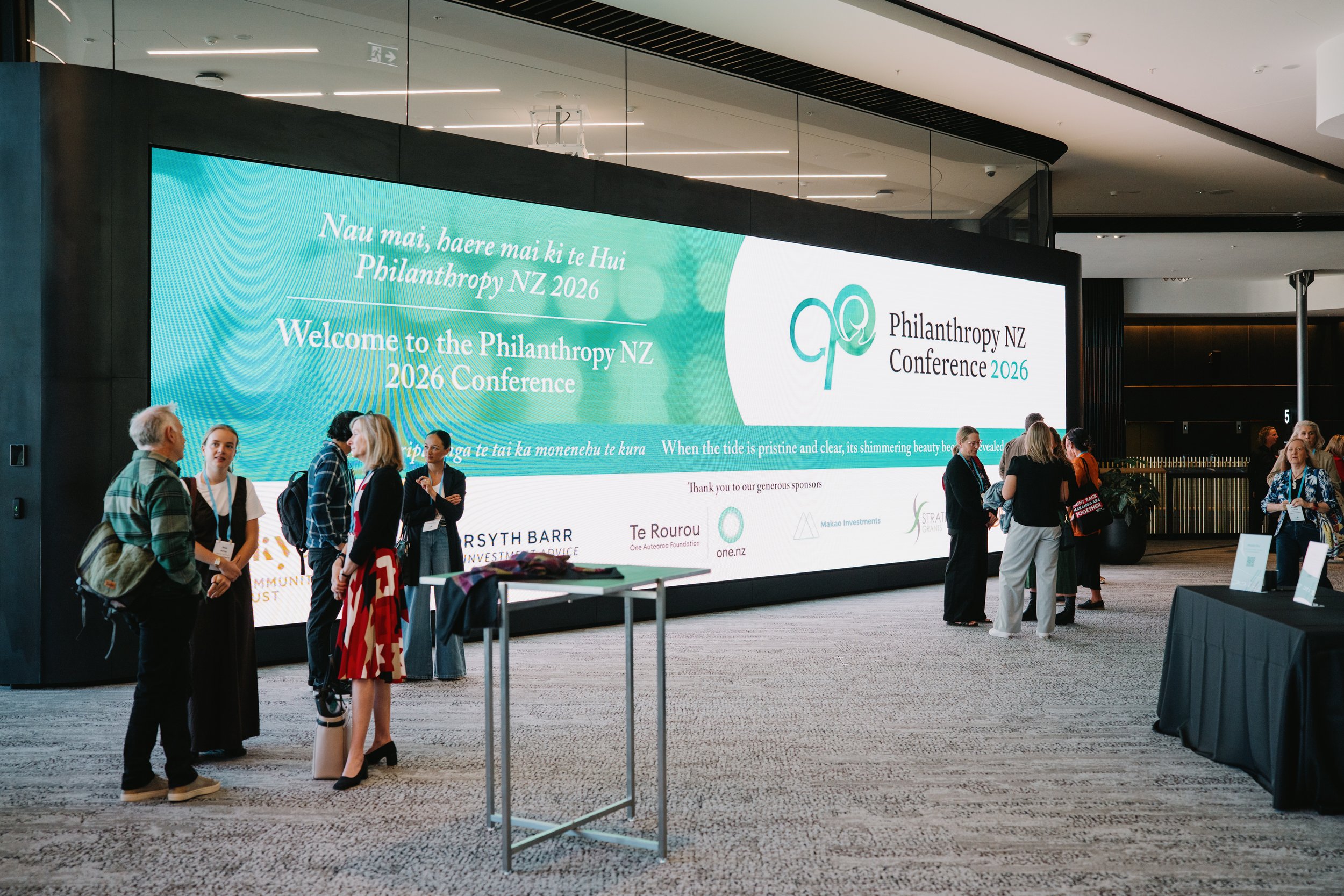
Delegates gather for the 2026 Philanthropy New Zealand Conference at the newly opened NZICC on 4 March (Photo via Philanthropy NZ)
Reflections from the Philanthropy New Zealand 2026 Conference
By Anthea Whittle, Fractional CTO, simpact AI - April 2026
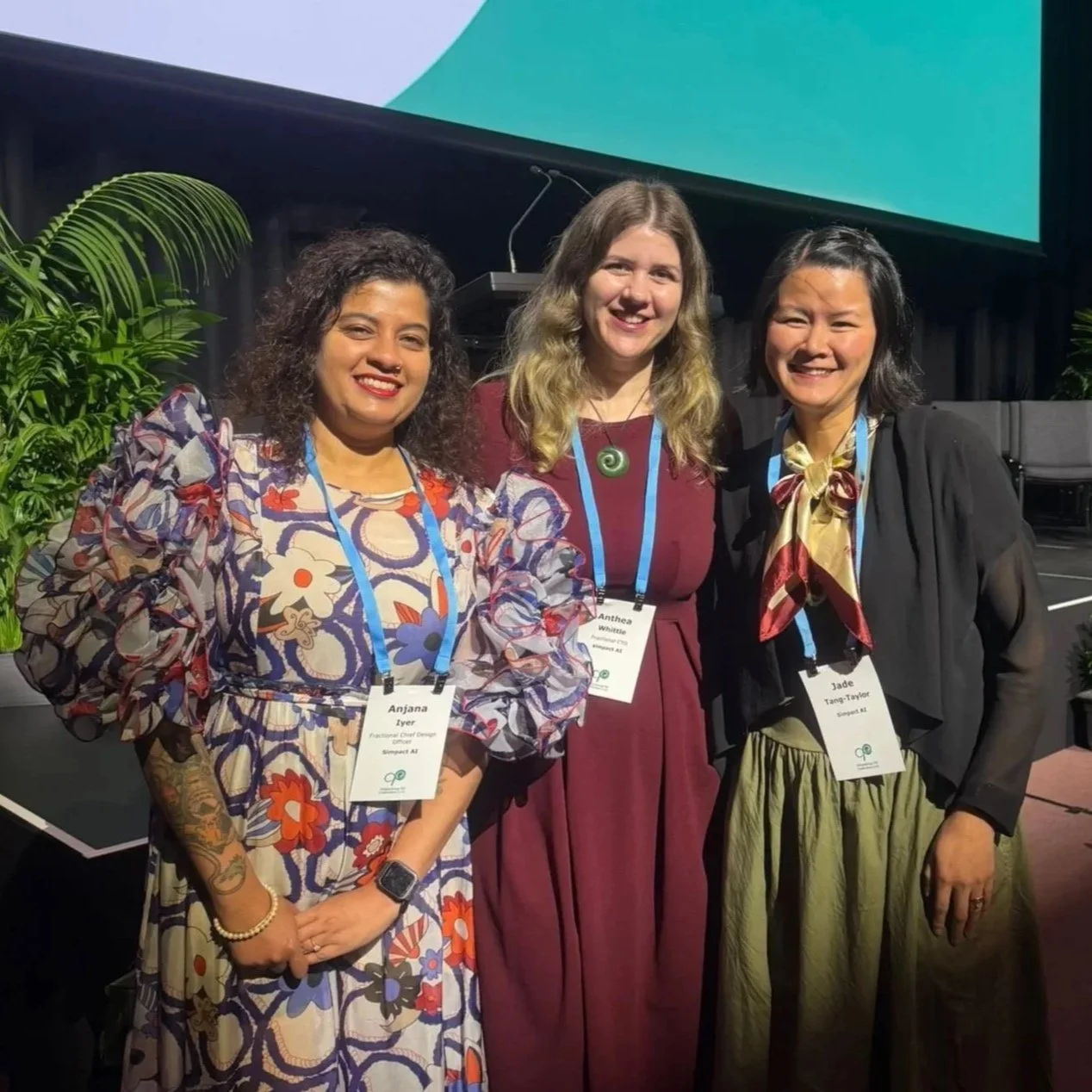
Jade, Anjana and I attended the 2026 Philanthropy New Zealand Conference at the NZICC on the 4th and 5th of March.
Kanohi ki te kanohi (face to face) with so many people who share our values and our questions: How do you invest thoughtfully during a tumultuous period? How do you know what's actually working? And what do we do about AI?
"Philanthropy can either disrupt systems or quietly keep them in place."
Opening keynote speaker Precious Clark set the tone for everything that followed, and her words stayed with us well after the conference closed. These are some of our take-aways and reflections.
Aotearoa’s original AI - Ancestral Intelligence
We have two kinds of AI in Aotearoa. The first kind is Ancestral Intelligence: mātauranga Māori. It is not a decoration or an afterthought. It is a foundation and a constraint. A gift unique to our country, and it can inform and support Artificial Intelligence adoption. People are the key.
Precious Clark reminded us:
“Technology does not raise a child, heal trauma, or restore mana. People do.”
Attending the Authentic Partnerships session, facilitated by Kate Fykberg, made it more concrete. It reminded me how much I still have to learn about Te Tiriti. That was uncomfortable, and necessary. Te Tiriti o Waitangi asks us to interrogate what we are building: Who owns it? Who is accountable when it harms? Who benefits?
Any AI or technology brought into this sector should amplify human connection, not substitute it. These are not abstract principles for us at simpact AI, they’re the values we build from.
The honest conversation about AI
The word "AI" is loaded. There is no time to become an expert as the tools evolve ever more rapidly, and for those working in philanthropy and social impact, the urgency to form an opinion right now can feel overwhelming.
What the conference made clear is that the question is not if we use AI. It is how to do it in a way that serves people, place, and future generations.
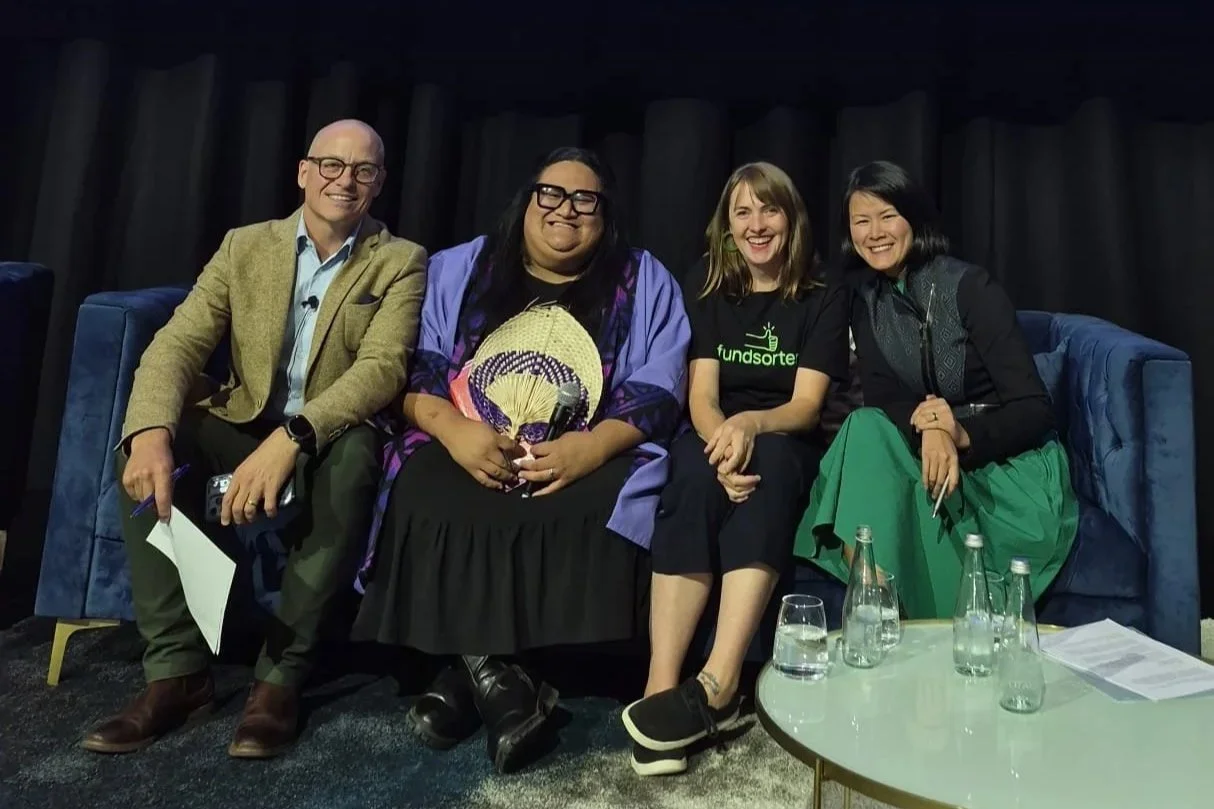
On Day 2, Jade joined Lani Evans MNZM and Namulau'ulu Nu'uali'i Eteroa Lafaele on the AI (for Good) and New Tech panel, facilitated by Arron Perriam.
The kōrero surfaced what many in the room were genuinely grappling with. An invitation to cautious optimism: to experiment and learn thoughtfully, and to be clear-eyed about real harms, including hallucinations, bias, privacy risks, power concentration and environmental cost.
The sharpest prompt from that session: if you cannot articulate the meaningful positive outcome of how you are using AI, and how you will measure or prove it, it is probably not ready.
AI is not going to wait for any of us to catch up. But we choose the values and structures that govern how we engage with it.
For fund managers thinking about how AI fits into their own operations, or into the organisations they fund, that is a useful frame. Not "are we using it?" but "can we say what it is for, and how we will know if it is working?" We at simpact AI look forward to helping to answer these pātai (questions).
Rangatahi will carry our choices
For young people in funding, Youth in Philanthropy Aotearoa (YIP) is “a network of under-35s connected to the philanthropic funding space in Aotearoa, working to shift power and wealth back to communities.”
Though youth representation is this space is small, rangatahi were not forgotten at the conference. We recognise that young people are living inside this technological and societal shift, with real uncertainty and anxiety… but also real potential. We can support by teaching skills for navigating uncertainty, for being confident and resilient as well as connected to themselves and their communities.
When they are given the tools, space and mandate to co-design, they move from helplessness to agency. The same is true for community organisations. When reporting stops being a burden and becomes a way of telling their story with pride, something shifts.
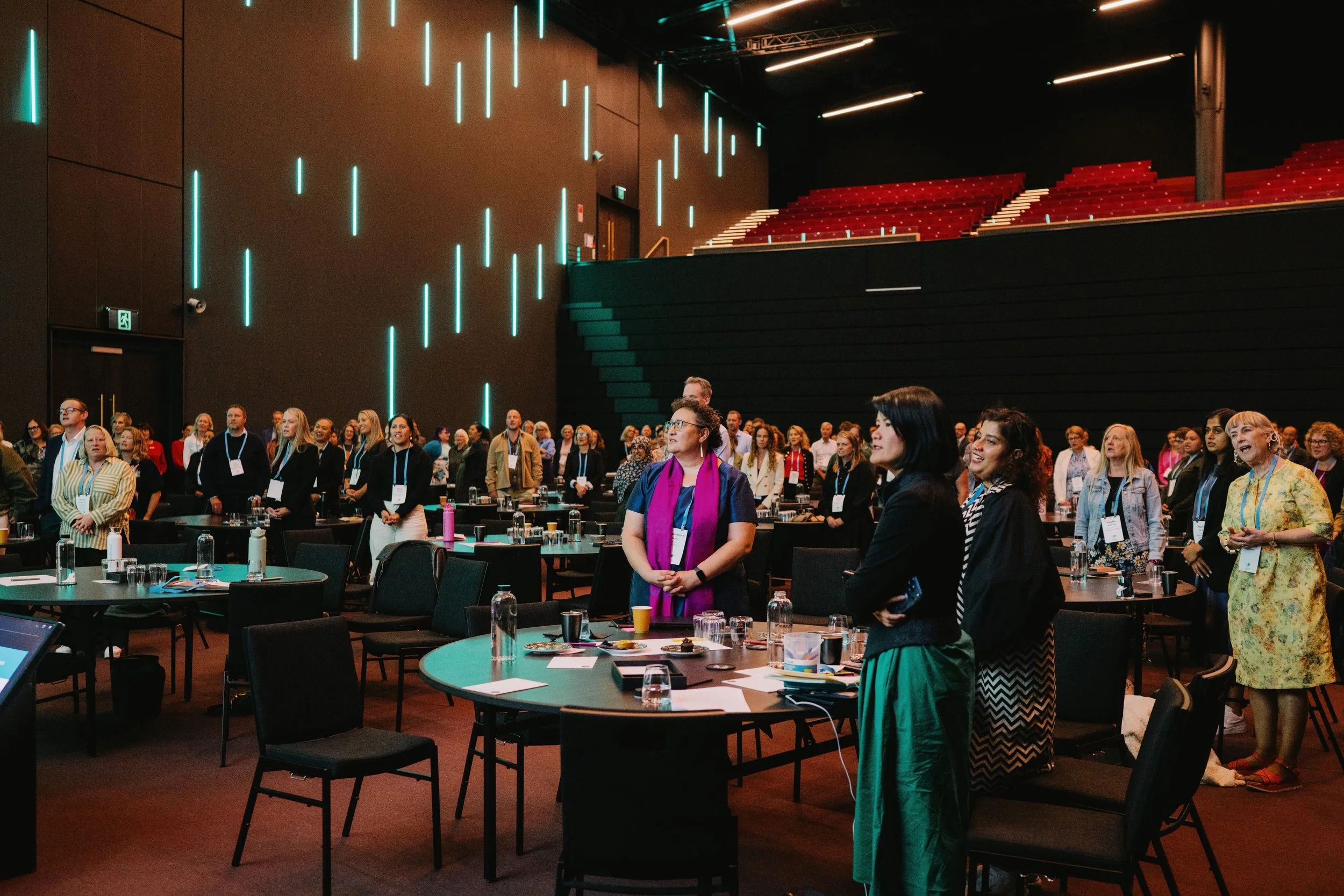
Delegates join in waiata in the main theatre.
What funders are being asked to do differently
The Equity and Systems Change workshop, led by Eruera Tarena, Maria Ngawati and Gael Surgenor, issued a clear challenge to the sector: stop fixating on short-term outputs and tidy programmes. Back infrastructure. Back movement-building and narrative change over eight to ten years.
Anjana was struck by how concrete the examples were. Koha-based zero-interest lending. Sam Stubbs redirecting 15% of KiwiSaver fees into long-term affordable housing through Simplicity. These made "systems change" feel less like a buzzword and more like something you could actually act on.
From Marcus Akuhata-Brown came what may have been the most important term of the conference: co-decide. Not "we fund, you deliver," but sharing risk and learning, backing operational capacity, and genuinely bringing communities into decisions.
This reframes what good impact reporting should look like to funders. Not a compliance exercise produced under pressure at year-end, but a shared tool for understanding what is actually happening in communities and why. If you are asking grantees to co-decide with you, you need to be able to see and hear what they are experiencing. That requires better communication, better visibility of outcomes and the stories of the impact grantees are making.
simpact AI’s official launch!
Day 2 was a special milestone: simpact AI officially launched.
After 12 months of prototyping alongside social impact leaders and advisors, we chose this room, full of funders, community advocates and practitioners as the right place to step forward. Our fabulous founder Jade shared our introduction during the AI (for good) and New Tech panel.
simpact AI transforms qualitative data, including interviews, stories and field notes, into compelling, structured impact reports. Reports that take weeks, rather than months. Reports consistent enough to compare across a portfolio. Reports that bring community voices to life rather than flattening them into a data point.
For fund managers, that last part matters most. When every grantee reports differently, it is almost impossible to see the full picture: what is working, what is not, where the gaps are, and where equity is being quietly undermined. simpact AI makes reporting easier for community organisations, which means better, more meaningful intelligence for the people funding them. Consistent data, a clear view across your portfolio, and the lived experience of communities told in their own voice.
These experiences stay with us
The energy of the conference, the enthusiasm of the people connecting to enact more positive influence while recognising where sector improvements can also be made… Exceeded all our expectations, and we are delighted that our little postcard made it to the hands of organisations who have reached out to us for a conversation since the conference close. Thank you.
An invitation to funders
Now is the time to consider adding reporting support to the kete (basket) of support you give your grantees. We have created a partnership model where you can engage simpact AI to work with one or many grantees to surface the impact insights, reports and stories of meaningful change that prove the value of your investment.
If you are a fund manager looking for better, more consistent, insight from the organisations you fund, we would love to talk.
Schedule a free discovery call
I look forward to meeting you!
Anthea
simpact AI is an impact reporting service that helps community organisations tell their story using AI for good, making reporting easier for communities and more meaningful for funders.