
Portfolio / Case study
Warriors Community Foundation
Five Year Impact Report · 2021–2026 · Tāmaki Makaurau Auckland
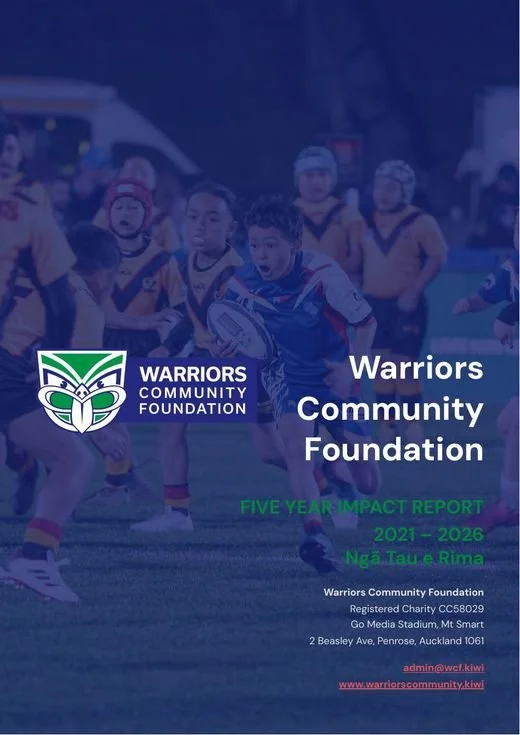
Six years of reports, data and feedback, turned into one story that shows funders what the Warriors Community Foundation really does; produced in just two weeks.
Jump to the report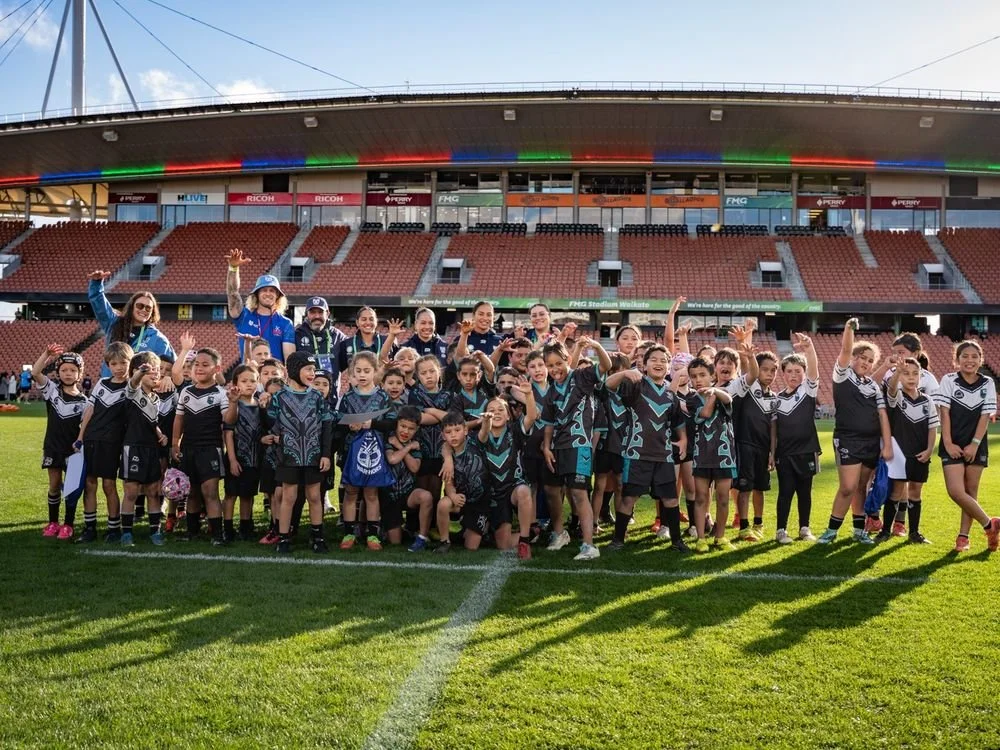
The organisation
The Warriors Community Foundation is the charitable arm of the One New Zealand Warriors. It uses rugby league, and the mana of the club, to connect, educate and inspire tamariki (children), rangatahi (young people) and whānau (families).
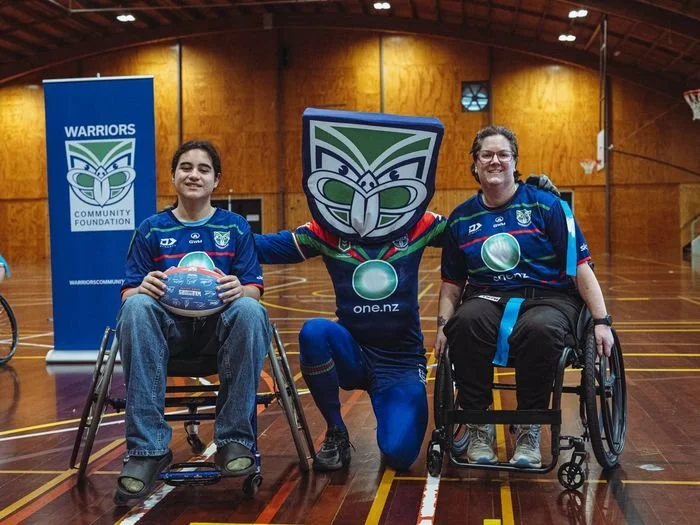
Every programme is built on Te Whare Tapa Whā, a Māori model of wellbeing. Its flagships, Tupu Māia for girls and Tama Toa for boys, now run in up to 18 schools a week, alongside a literacy competition, wheelchair rugby league and roadshows across Aotearoa.
- Led by Lincoln Jefferson, CEO | Tumuaki since the Foundation became a charity in 2020
- Sector: youth wellbeing, sport and inclusion
- Team: a small permanent team, five to twelve part-time community activators and four volunteer trustees
- Report: Five Year Impact Report, financial years 2021 to 2026
The challenge
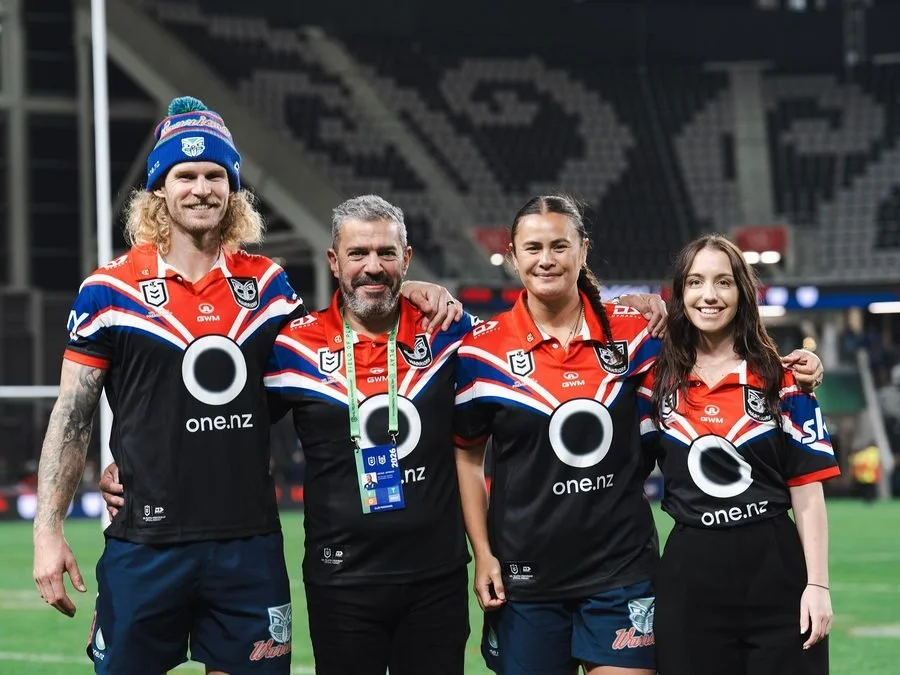
Many people, funders and local boards included, assume the Warriors club pays for everything the Foundation does. It doesn't. The Foundation is a separate charity that raises its own funding, and CEO Lincoln Jefferson found the penny often dropped only once people met the team or saw a session. Grants were being missed in the meantime.
There was a harder story to tell, too. In 2024–25 the Foundation chose to see fewer children for longer, swapping one-off school assemblies for five-week blocks. Participation fell while contact hours rose. As a headline number it looked like a drop. Told properly, it was the strategy working.
And the evidence sat across six years and three calendars that don't line up: the rugby league season, the financial year and the school year. A small team that calls itself a "doing organisation" had no spare time to pull it together, least of all in a finals season.
The story was scattered across:
- 6 years of audited performance reports
- A participation spreadsheet back to 2021
- 27 letters, feedback forms and handwritten notes
- 59 photos and 2 videos
- 18 programme guides and session plans
- Three calendars that don't line up
- What Lincoln knew first-hand, and could only share by talking it through

How we helped, step by step
AI extended our reach across six years of material. People held the relationships, the judgement and the final say.
-

Step 1: Data Collection
Conversation
A discovery call and one 90-minute interview with the CEO.
We started the way we always do, with a conversation. After a discovery call, we held one structured, recorded interview with Lincoln Jefferson: mission, achievements, reach, challenges, partners and where the Foundation is heading. Lincoln shared a folder of everything the Foundation already had. That was most of the time we asked of him.
-

Step 2: Data Analysis
Sensemaking
AI helped us read across six years. People checked every number.
We used AI to read across the interview, six years of audited reports, the participation spreadsheet and dozens of letters and feedback forms, and to line up the season, financial and school years. People decided what it meant. Where audited and internal figures differed, we used the audited ones and said so plainly in the report.
-
Step 3: Report Writing
Draft
A first written draft one week after the interview.
We wrote in the Foundation's own frame: Te Whare Tapa Whā, its mission to connect, educate and inspire, and its warm, professional voice. We drafted a one-year and a five-year report side by side, so when Lincoln decided the five-year story was the one to tell, it was ready. Then we condensed more than 50 pages to 33. Every number traces back to a source document.
-
Step 4: Report Design
Deliverables
A designed web report in the Foundation's own brand.
The first designed draft was in front of the Foundation two weeks after the interview. We built the report in Gamma with the Foundation's logo, colours and photos: a web report that reads on any device and exports to PDF. It carries five impact stories, from a girls' programme rebuilt around what the girls asked for to handwritten notes from rangatahi in a youth justice residence. Key recommendations went on a separate page for the team.
-
Step 5: Final Review
Review
Reviewed in the report itself, around a busy finals season.
Lincoln and his team commented directly in the web report, so every piece of feedback landed exactly where it applied. We fitted review calls around the NRL finals, confirmed each figure against the audited records, and delivered the final version the day after the last review call. The Foundation now edits the report itself.
The Impact Report simpact AI created
The Warriors Community Foundation now has one audited, funder-ready account of its first six years, in its own voice and brand. It shows the strategy behind the numbers, tells the stories numbers can't, and names honestly what is still to do.
The reporting came off a busy team's plate, and they kept the keys: the Foundation can edit and reuse the report with funders, local boards and partners.
Trouble viewing it here? Click here to view it in Gamma.
Working together, in numbers
120+ files
the Foundation shared with us: reports, data, letters, photos and videos
6 years
of audited and internal financial records, reconciled into one account
90 mins
time from WCF: one structured interview with the CEO, after a short discovery call
2 weeks
from interview to a designed first draft in front of the Foundation
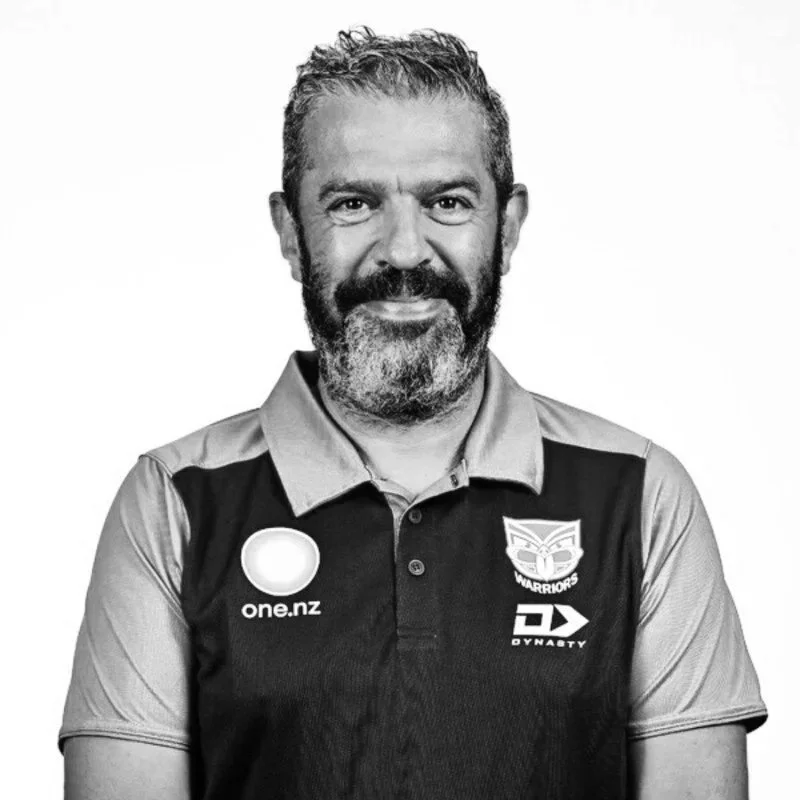
“Working with simpact AI (and Jade) was a fantastic experience.In a very short timeframe, they helped us bring five years of impact to life in a report that genuinely reflects our journey as a foundation. Jade and her team brought together our data and insights to create a document we’re proud to share with existing and potential stakeholders.
I would highly recommend simpact AI to any not-for-profit looking for a bespoke, high-quality impact report.”
Ready to share your own impact story?
Whether you're a community organisation ready to tell your story, or a funder who wants to lift reporting off your grantees' plates, we'd love to talk.