By Lisa Lopeti (Fractional CFO, simpact AI)
On a crisp Wednesday morning on 20 May, almost 200 participants from the community sector across Aotearoa gathered for a free two-hour virtual workshop hosted by simpact AI and Fundsorter as part of Tech Week 2026.
As part of the simpact AI team, it was wonderful to see so many changemakers in one space. The energy in the group chat was encouraging — engagement was high, and questions flowed throughout the session.
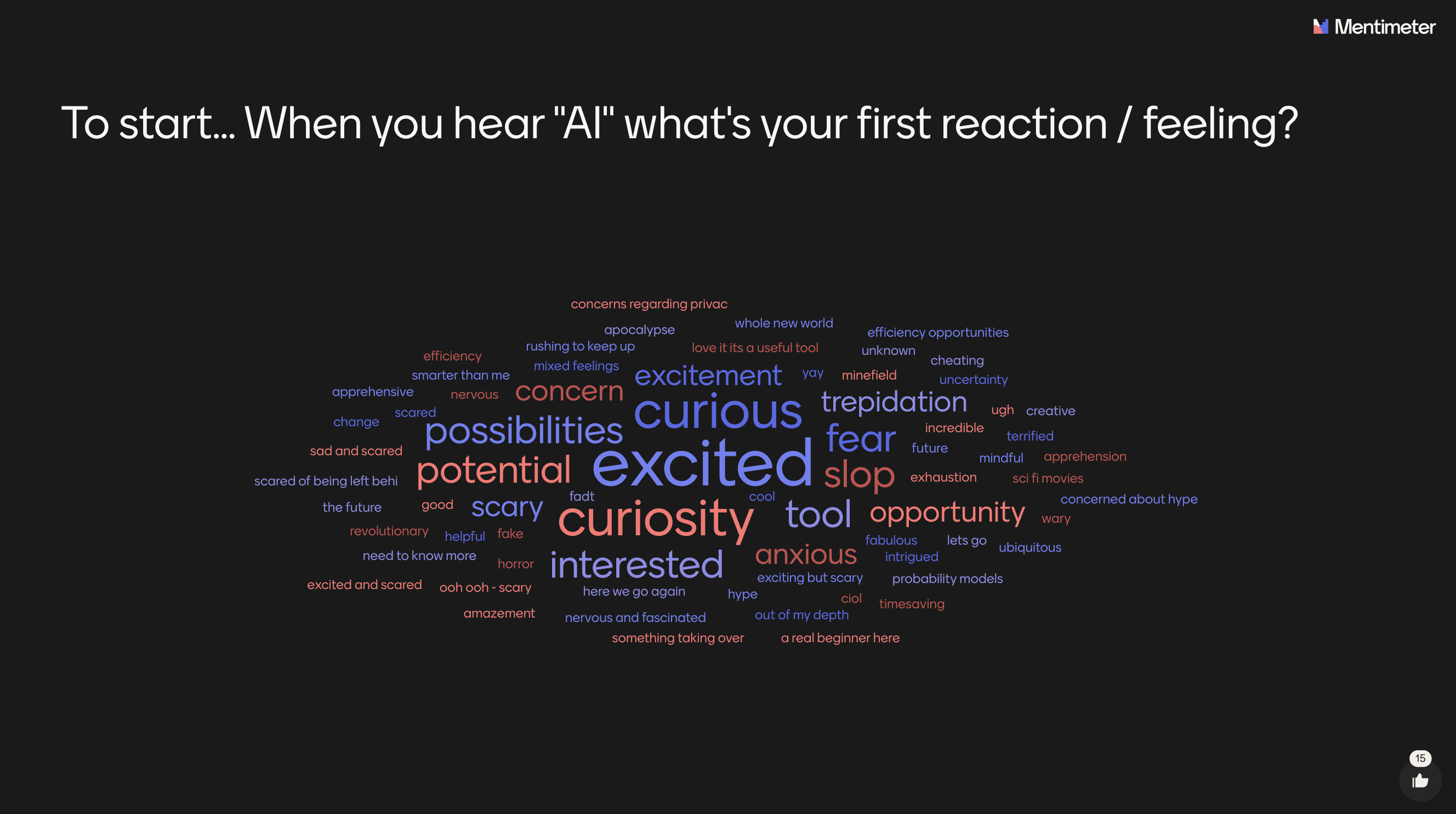
To kick things off, participants were asked to share their first reaction or feeling about AI. Many expressed excitement and curiosity, while others voiced anxiety and concern — which was entirely expected. Most participants identified as being at the "individual learning and experimentation" stage of their AI journey — making the workshop's practical, grounded approach all the more fitting.
Here are my reflections and key takeaways from each session:
AI Fundamentals (Lani Evans)
AI has been around since the 1950s but has developed exponentially in recent years, meaning tools and information are constantly and rapidly evolving. Because the big tech companies driving AI globally are motivated by profit rather than mission — and their leadership lacks diversity — the tools and systems being built don't always reflect the needs of communities. For me, this is all the more reason for changemakers to skill up in AI and seize the opportunity to shape how it's used, and lead with purpose.
While cognitive decline is a commonly talked about issue, our capacity for expertise and critical thinking is something we can actively cultivate — so don't outsource all your thinking to AI. And while it's inevitable that AI will displace some jobs, the World Economic Forum reports that AI will in fact create more jobs than it removes by 2030. We are definitely living in interesting times.
Lani's framing of "cautious optimism" really resonated with me. With big opportunities come big risks — felt at every level, from individuals and whānau to communities, the economy, and society as a whole. But there are things we can do to shape the future: advocate for AI policy (including adding your signature to this petition to regulate AI in NZ), help build AI commons, and invest in digital literacy.
Five Founders in Five Minutes
(Fundsorter, Good Numbers, fundrAIz, Kaha Create, simpact AI)
All five founders built their AI-powered solutions from pain points that I know are very real in the community sector — and each is a compelling example of AI being used for good. Having worked in this sector for many years and encountered multiple software tools and CRMs, I believe every one of these tools brings genuine value.
Fundsorter makes it possible to create a bespoke organisational profile, match your funding needs with the funding sources most likely to succeed, and even draft an application — all in just 20 minutes. Revolutionary in my eyes!
Bookkeeping isn't the most invigorating task for many small non-profit leaders who often find themselves wearing every hat — so be sure to check out and chat with Duncan Matthews at Good Numbers, especially if you're a "voluntold treasurer"! 😄
fundrAIz impressed me with its ability to give fundraisers "Amazon-level intelligence" — knowing how to ask for the right thing, from the right person, at the right time is so empowering. Love this all-in-one CRM platform Carlos Aguilera!
I also love what Pera Barrett has built with Kaha Create — helping organisations share their mātauranga at scale, from preserving and transferring cultural knowledge and te reo, to creating bespoke learning and development with community values at the centre.
And with my simpact AI hat on and insider knowledge: I think we’ve got a pretty game changing tool! So if you'd like to spend less time on impact reporting or tell your impact story more effectively, take advantage of our TechWeek 20% off special.
Practical Workshop Session(Alanna Irving)
This was a particularly insightful session on how to build context with AI over time — because we are specific people and organisations. One thing worth understanding is that due to data compaction, AI chat context gradually disappears and loses detail between sessions. Building a persistent context profile is the solution to this.
Alanna walked us through these practical hands-on steps to get started:
Get an AI tool to interview you
Get an AI tool that can edit and save files on your computer (Note: this requires a paid version of your AI tool)
Create and save a context profile
Create and save a project plan
Connect to more data sources (such as your emails, cloud drive, Xero etc.)
Back up your local data — in case your laptop gets destroyed by an elephant! 😄
With this shift in workflow and mindset, we can begin to genuinely collaborate with AI rather than just use it. One important note on data privacy: free versions of tools like ChatGPT and Claude may train on your data, whereas paid versions typically do not — so if privacy is a concern, a paid plan is worth considering.
Three Final Takeaways:
Be intentional. If you love doing something, keep doing it and keep growing in it. Outsource what you don't enjoy to AI — I personally can't wait for the day I can afford to outsource all my housecleaning to an AI robot! 😄
Knowledge and skill put you in the driver's seat. The more you learn, the more confidently you can harness AI for good — so take advantage of the many learning resources and courses available.
And finally: what are the deeply human aspects of you and your work? AI won't be replacing those anytime soon such as your critical thinking and emotional intelligence. So cultivate curiosity, embrace AI-powered solutions, and free up more time to do what matters most — serving and creating impact in your communities.
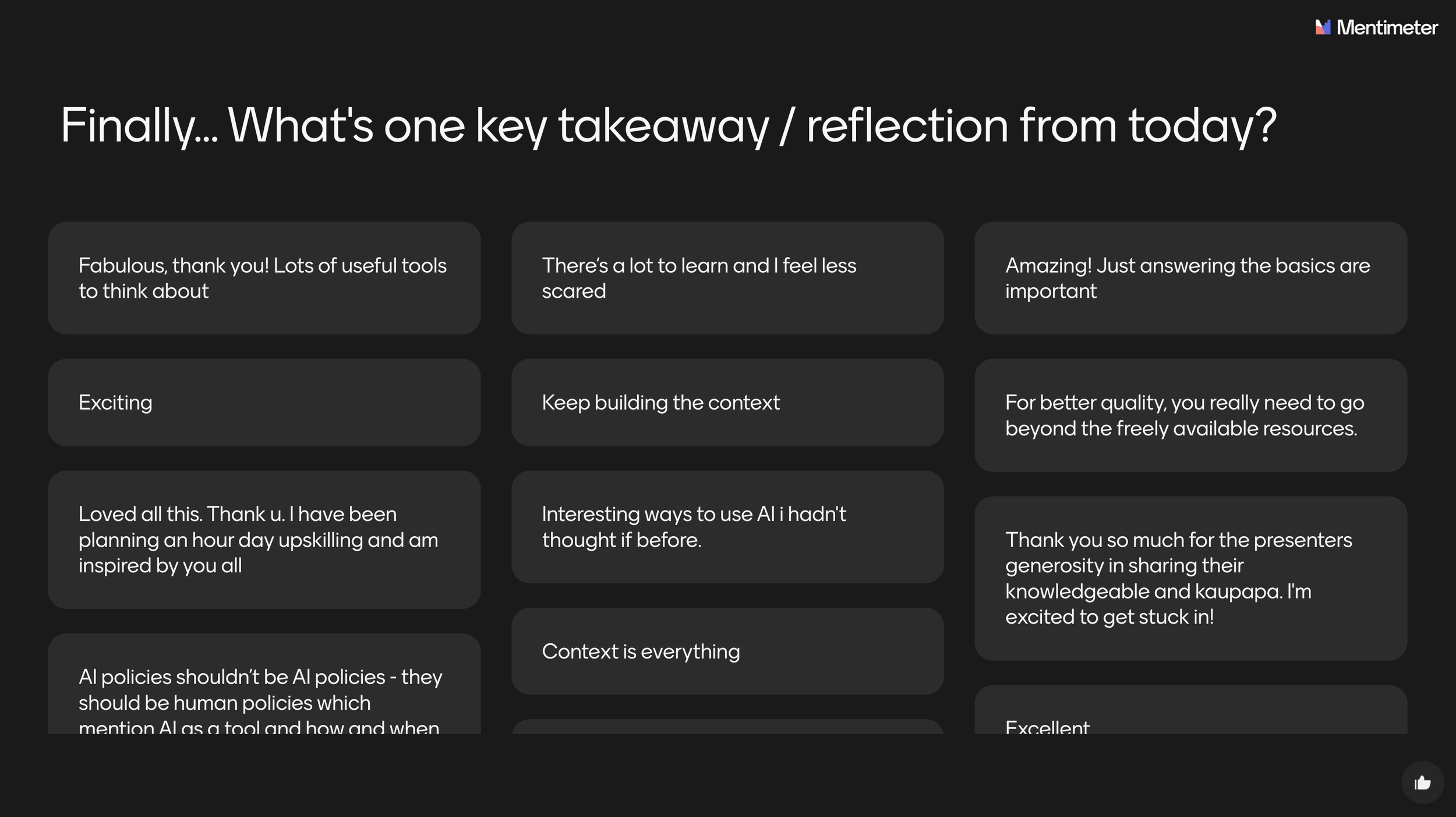
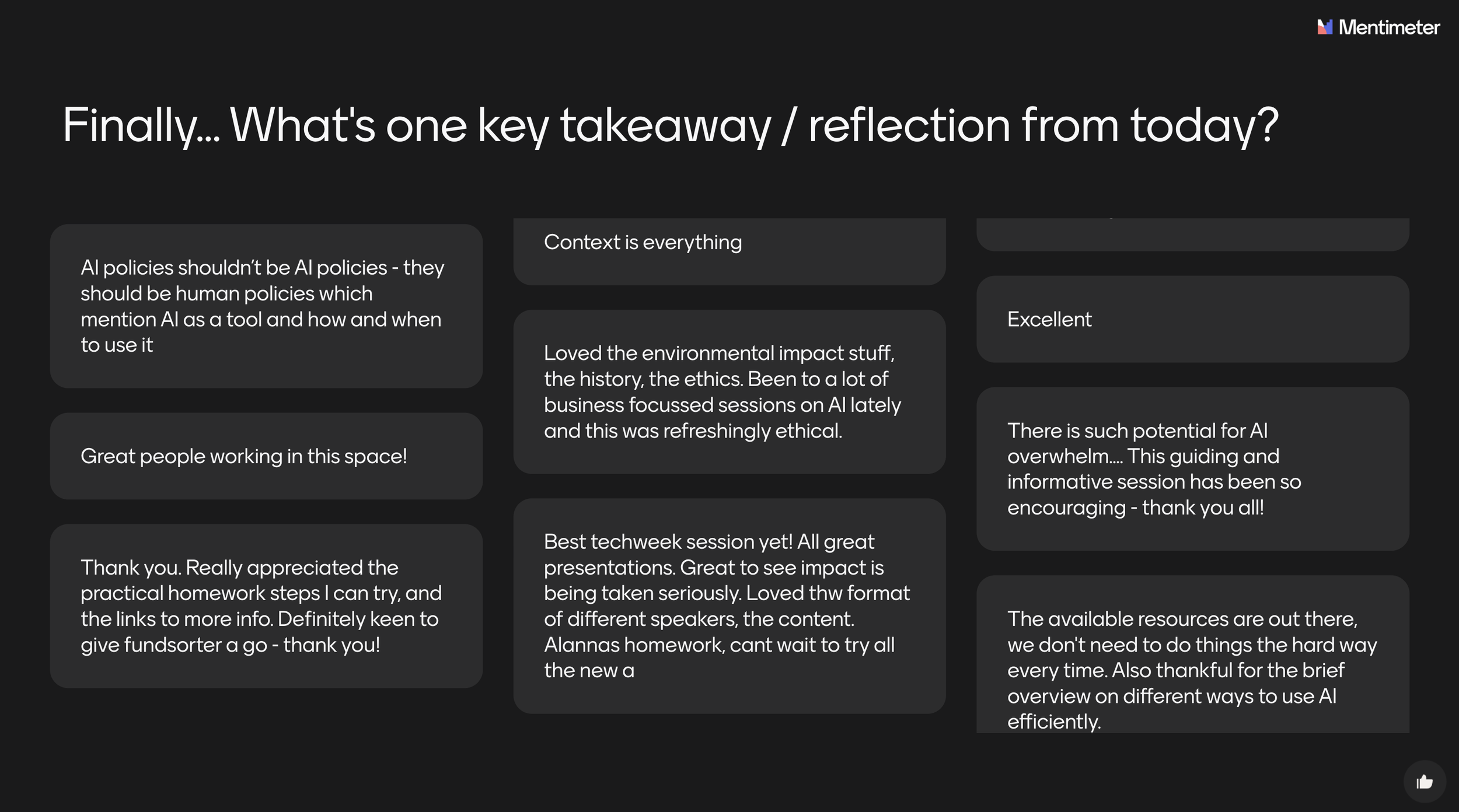
If you’re interested, here is the slides + recording below:
Other useful links, resources, courses, and further reading:
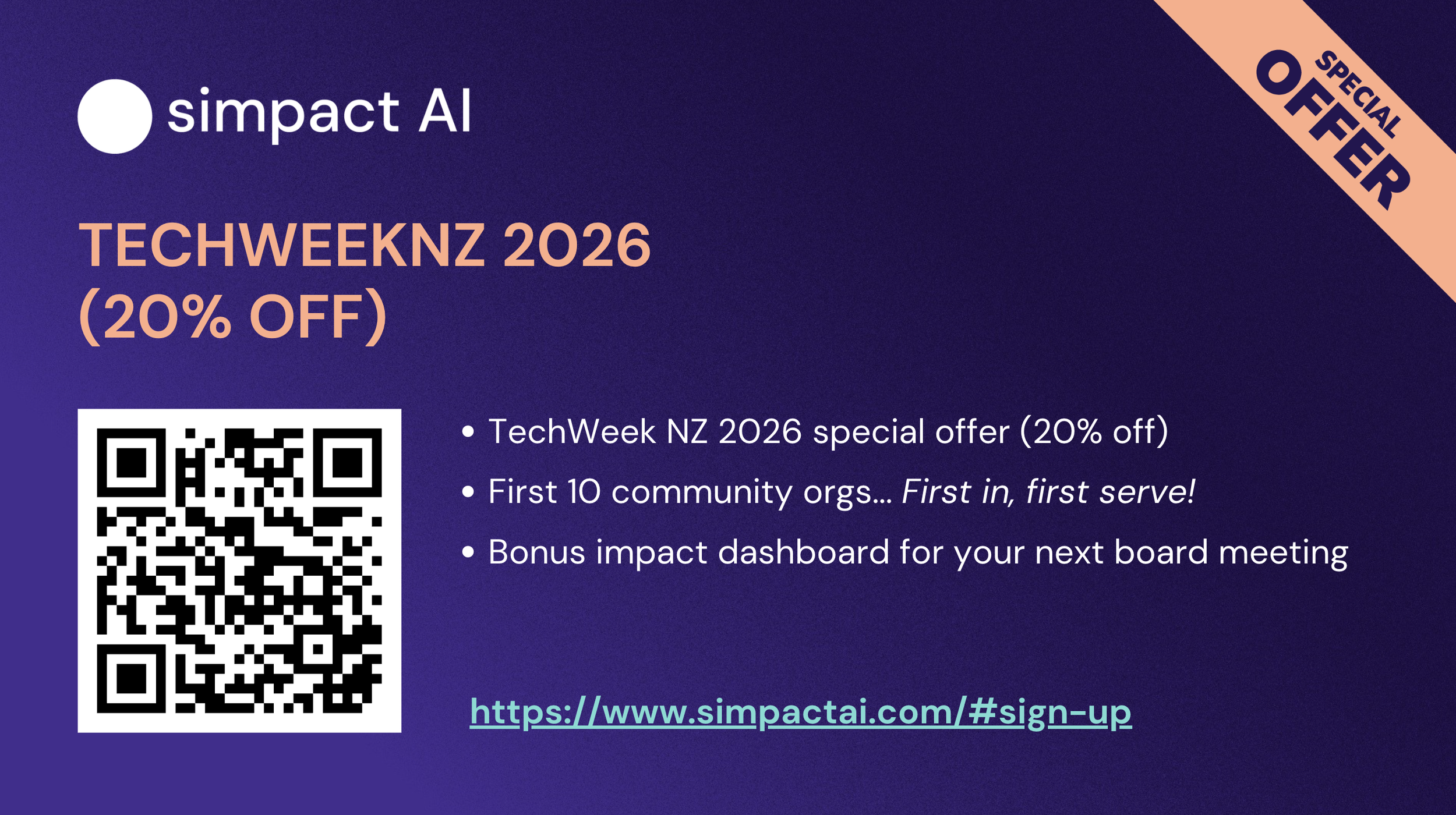
TechWeekNZ 2026
(SPECIAL OFFER: 20% off)
As an attendee of the AI for Good workshop during
TechWeek NZ 2026 you are eligible for this special offer & limited time only discount (20% off!)